Cookware construction field guide - updated August 19, 2026
Cuisinart Cookware Materials Guide
Understand Cuisinart stainless steel, fully clad construction, disc bases, hard-anodized aluminum, and nonstick coatings before buying.
As an Amazon Associate I earn from qualifying purchases.
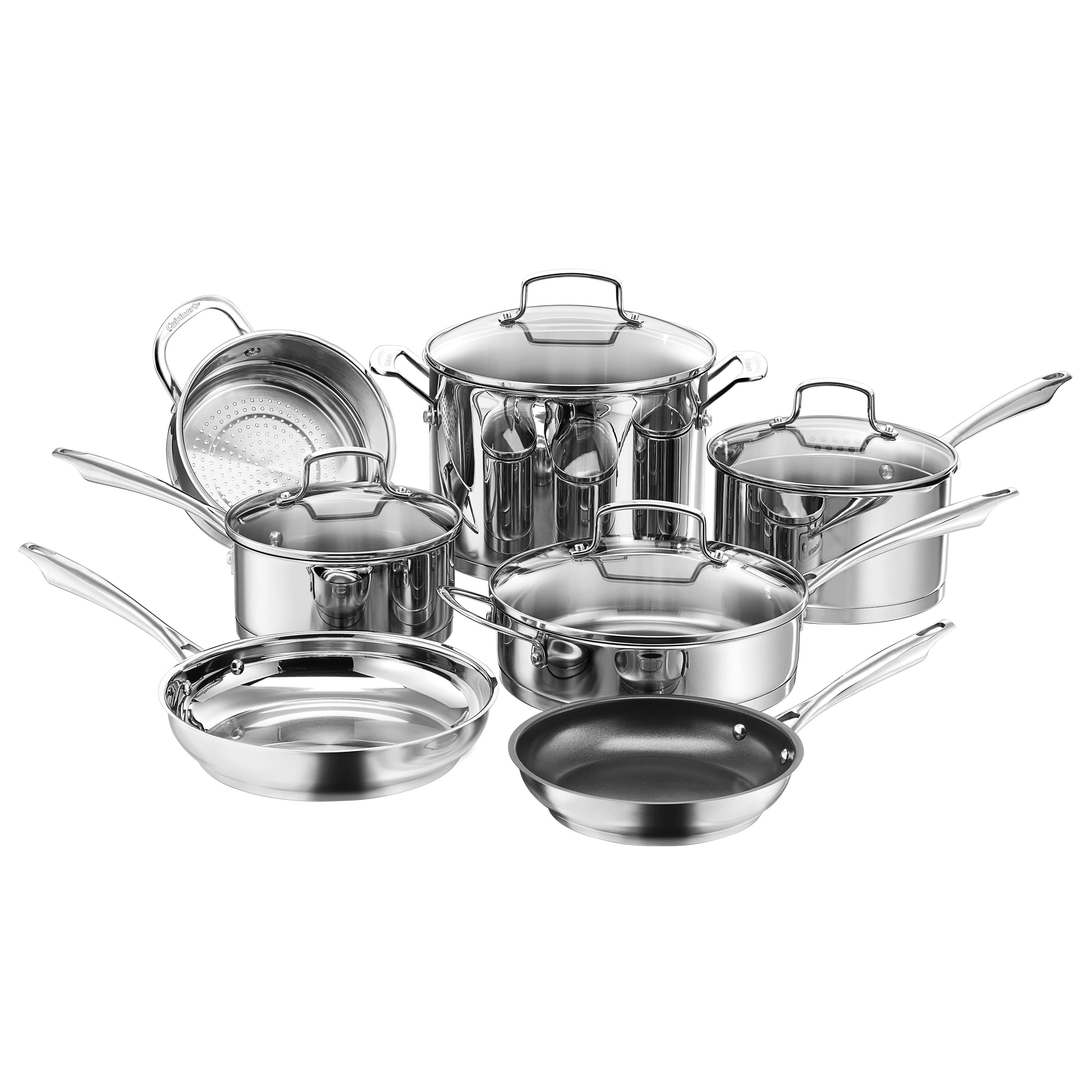 Independent research guide
Quick answer
Choose fully clad stainless for searing and long-term durability, disc-base stainless for budget basics, and hard-anodized nonstick for easier release and faster cleanup.
01
Read this first
The decision in four lines
01
Material labels describe surfaces; construction explains how heat moves through the whole vessel.
02
Fully clad stainless, disc-base stainless, hard-anodized aluminum, ceramic-style nonstick, and cast iron solve different jobs.
03
No single material wins searing, release, weight, responsiveness, and zero-maintenance ownership at once.
04
Choose a durable core, then add specialized pieces where they create a real benefit.
02
Task before brand language
Decision table
Searing plus pan saucesClad stainless
Technique and weight
Budget boiling and simmeringDisc-base stainless
Less sidewall response
Eggs and pancakesNonstick aluminum
Coating is replaceable
Heat retentionCast iron
Heavy and slower to respond
Fast temperature responseAluminum-based body
Needs a compatible cooking surface
03
What changes the answer
Core analysis
Fully clad stainless
Fully clad cookware sandwiches conductive metal through the body of the pan. In the Cuisinart lineup, that makes MultiClad Pro the performance-focused stainless direction.
Disc-base stainless
Disc-base stainless can be practical and affordable, especially for saucepans and stockpots, but it may not behave like fully clad cookware when heat climbs the sidewalls.
Hard-anodized and nonstick
Hard-anodized aluminum heats quickly and pairs well with nonstick surfaces. It is convenient, but the coating needs gentler heat, utensils, and cleaning than stainless steel.
01
Separate cooking surface from heat core
Stainless is durable and nonreactive but relatively poor at spreading heat by itself, so stronger stainless cookware surrounds a conductive aluminum core. Nonstick describes the interior surface; the body beneath may be hard-anodized or conventional aluminum. Read both layers before comparing sets.
- Triple-ply usually means three bonded material layers, but coverage still needs confirmation.
- An encapsulated base can perform well on the floor without heating sidewalls like full cladding.
- Hard anodization changes the aluminum surface but does not make a nonstick coating permanent.
02
Match thermal behavior to the dish
Responsive cookware changes temperature quickly when the burner moves; retentive cookware resists change and stays hot after food enters. Sauce work benefits from control, steak benefits from enough stored heat, and eggs benefit from release. The useful kitchen combines these traits rather than maximizing one everywhere.
- Thin cookware can respond quickly yet heat unevenly.
- Heavy cookware can stabilize temperature but become tiring when full.
- Induction compatibility depends on the exterior magnetic layer, not the conductive core alone.
03
A sensible Cuisinart material stack
Use MultiClad Pro or another verified clad stainless line as the durable center when budget allows. Chef's Classic Stainless covers value-oriented basics. Add a coated skillet for delicate food and cast iron only when its retention and oven role solve meals you actually cook.
- Avoid duplicating every saucepan in both stainless and nonstick.
- Reserve coated surfaces for tasks where release changes the outcome.
- Judge ceramic-style coatings by care and replacement reality, not by color alone.
04
Reference models, not vague collections
Models worth comparing
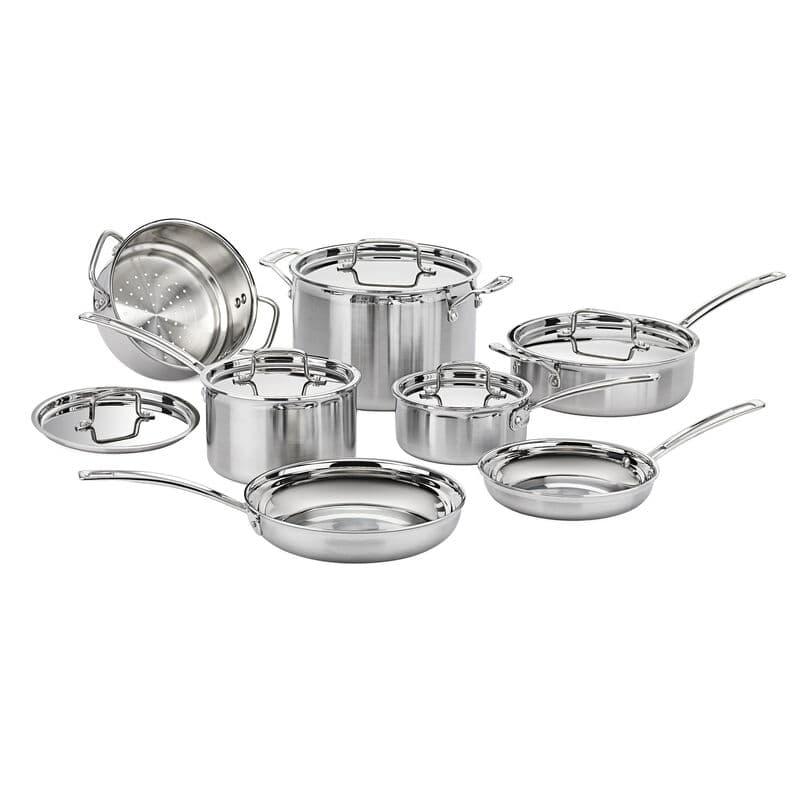
Best overall Cuisinart stainless set
MultiClad Pro
- Model
- MCPS-12N
- Construction
- Triple-ply stainless steel with an aluminum core extending through the base and sidewalls
- Cooktop
- All stovetops, including induction, per the current manufacturer page
MultiClad Pro is the best Cuisinart cookware choice for most serious home cooks because the construction improves the cooking experience, not just the appearance or piece count.
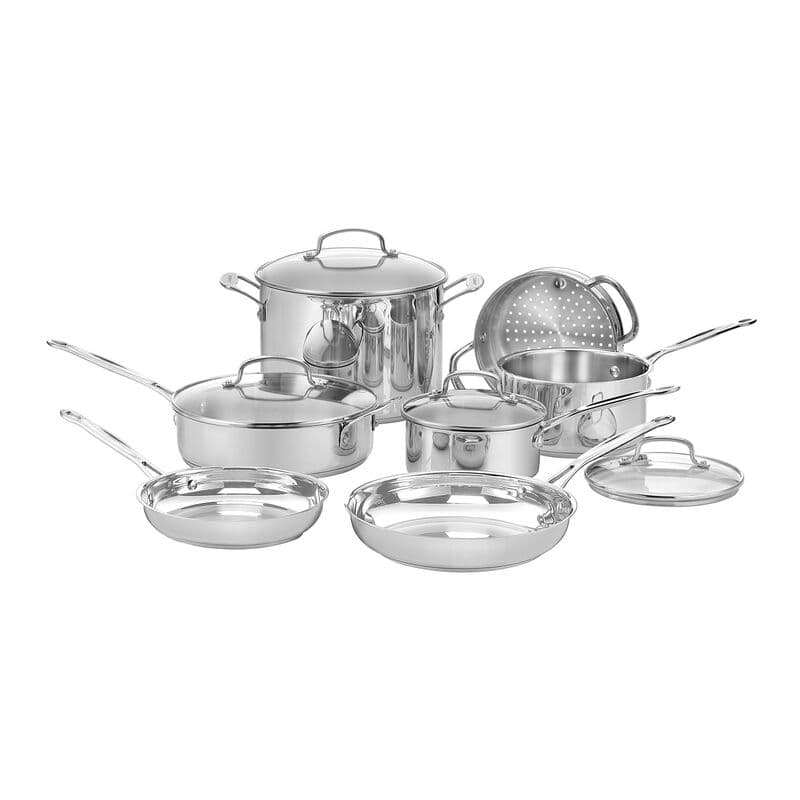
Best budget stainless Cuisinart set
Chef's Classic Stainless
- Model
- 77-11G
- Construction
- Stainless steel vessel with an aluminum-encapsulated base
- Cooktop
- Induction-ready, according to the current 77-11G manufacturer page
Chef's Classic Stainless is the sensible value set: useful pieces, induction compatibility, and stainless durability, with a clear construction tradeoff versus MultiClad Pro.
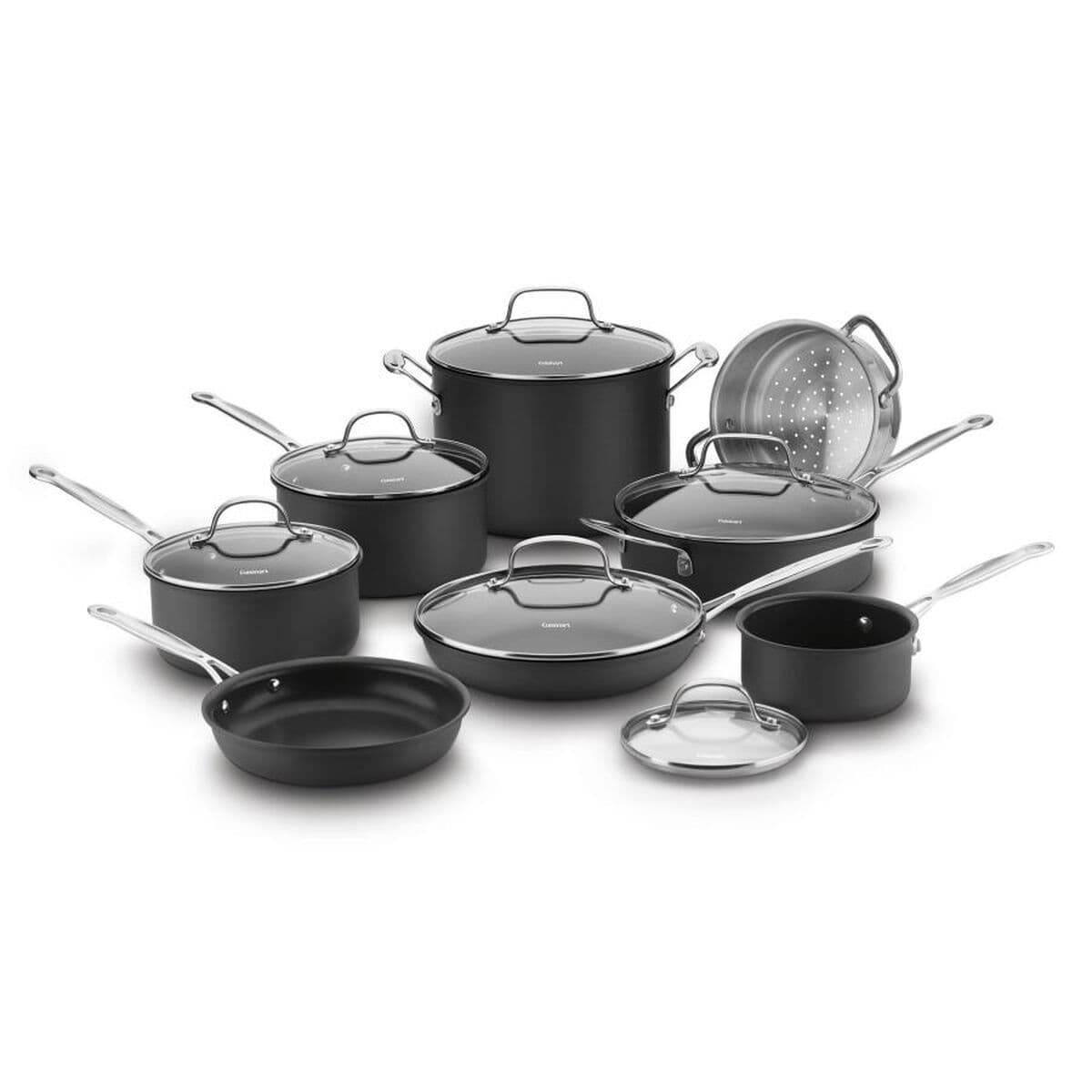
Best Cuisinart nonstick upgrade
Chef's Classic Nonstick
- Model
- 66-14N
- Construction
- Hard-anodized aluminum body with a coated nonstick cooking surface
- Cooktop
- Not positioned as induction-compatible in the current Cuisinart line guide; verify the exact model
Chef's Classic Hard Anodized is the better Cuisinart direction when release and cleanup matter more than stainless longevity or induction compatibility.
Before checkout
Five checks that prevent the wrong buy
Use this list on the exact retailer page. Collection names are not enough when bundles, colors, and legacy models differ.
- 1Identify the cooking surface
- 2Identify the conductive core and where it extends
- 3Check total vessel weight and helper handles
- 4Verify cooktop and oven compatibility
- 5Plan the cleaning and storage routine
How this guide was built
Specs first. Tradeoffs made visible.
We compare exact current reference models using manufacturer-listed construction, included pieces, compatibility, care, and safety details. We then translate those facts into task-level editorial recommendations.
We do not copy Amazon star ratings, publish unstable live prices, or claim hands-on testing we did not perform. A recommendation can change when a model, bundle, or source changes.
Read our editorial policy05
Short answers, exact scope
Frequently asked questions
What material is Cuisinart cookware made from?
Cuisinart sells multiple constructions, including clad stainless, disc-base stainless, hard-anodized aluminum with nonstick coatings, conventional aluminum nonstick, ceramic-style coated cookware, and cast iron. Check the exact collection and model.
Is hard-anodized cookware the same as nonstick?
No. Hard anodization describes a treated aluminum body surface; nonstick describes the cooking coating. Many hard-anodized sets include nonstick interiors, so both facts matter.
Is triple-ply better than stainless steel?
Triple-ply is a type of layered stainless cookware rather than a competing material. Its conductive core spreads heat more effectively than a single stainless wall, especially when cladding extends through the body.
What Cuisinart material lasts longest?
Uncoated stainless is the safest durability choice because normal cosmetic wear does not end the cooking surface's life. Handles, warping, and maintenance still affect total service life.
Primary sources
Verify the exact model
These manufacturer pages were checked on August 19, 2026. Retailer bundles and legacy versions can differ.