Material-specific care manual - updated August 19, 2026
How to Care for Cuisinart Cookware
Care and cleaning guidance for Cuisinart stainless steel, nonstick, hard-anodized, lids, handles, and everyday cookware stains.
As an Amazon Associate I earn from qualifying purchases.
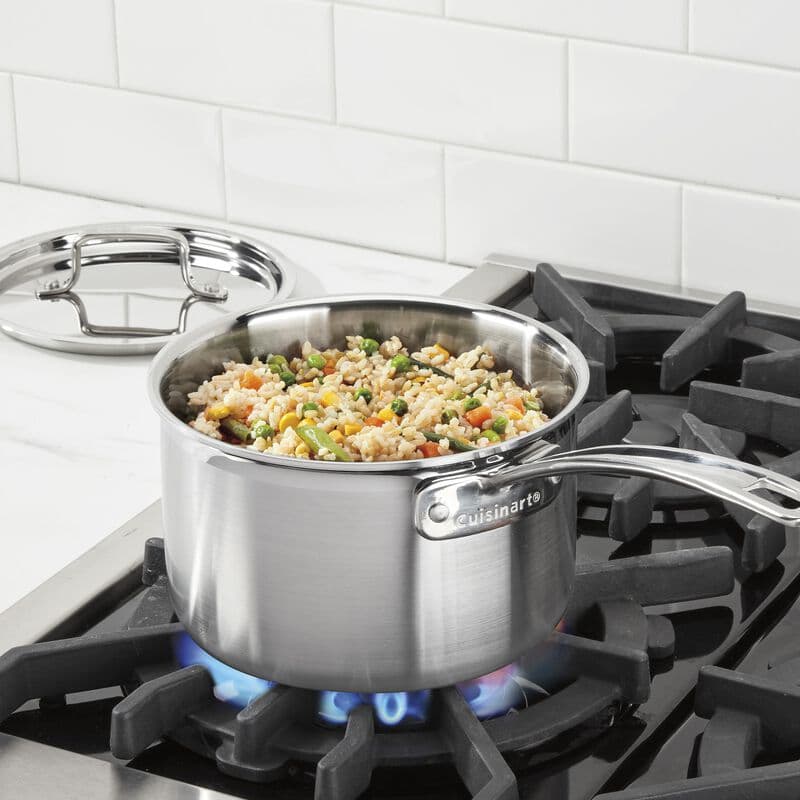 Independent research guide
Quick answer
Preheat stainless carefully, deglaze stuck food, avoid abrasive abuse on nonstick, and always follow the exact Cuisinart listing or manual for oven, dishwasher, and utensil guidance.
01
Read this first
The decision in four lines
01
Cleaning should follow the cooking surface: stainless can tolerate stronger restoration than coated cookware.
02
Let thermal shock subside before washing a hot pan, especially under cold water.
03
Dishwasher-safe language means permitted, not necessarily lowest wear.
04
A pan protector and dry storage often prevent more damage than another cleaning product can repair.
02
Task before brand language
Decision table
Fresh stainless fondWarm deglaze
Avoid splashing a dangerously hot pan
Burned stainless oilSoak plus stainless-safe cleaner
Test finish guidance first
Nonstick residueWarm soapy water and soft sponge
No abrasive shortcuts
Rainbow tintMild acid or stainless cleaner
Mostly cosmetic
Nested storagePan protectors
Uses a little extra cabinet space
03
What changes the answer
Core analysis
Stainless cleaning
For stainless cookware, let the pan cool slightly, soak stubborn food, then use dish soap, a non-scratch pad, and stainless-safe cleaners when needed. Deglazing while the pan is warm often does half the work.
Nonstick cleaning
For nonstick cookware, use soft sponges, moderate heat, and utensils that will not damage the surface. Avoid aerosol cooking sprays unless the exact care instructions allow them.
Storage and lids
Stack with care, protect nonstick interiors, and avoid banging glass lids or exposed rims. Small storage habits can extend the useful life of a cookware set.
01
Clean stainless in stages
Start with the least aggressive method. Deglaze while the pan is warm, let it cool to a safe handling temperature, wash with soap, and soak what remains. Use a manufacturer-compatible stainless cleaner only when ordinary washing cannot remove polymerized oil or mineral film.
- Food release during cooking is easier to manage than carbonized residue afterward.
- Salt added to cold water can contribute to pitting; dissolve it after water warms.
- Rainbow heat tint is usually cosmetic and can often be reduced with mild acid.
02
Protect nonstick before it needs cleaning
Most coating damage starts with unnecessary heat, sharp tools, or contact in storage rather than the final sponge. Cook at moderate temperature, use soft-edge utensils, and avoid letting residue repeatedly bake onto the surface. Gentle habits preserve release better than aggressive restoration.
- Do not use steel wool, harsh scouring powder, or metal scraping on coated interiors.
- Aerosol spray residue can become stubborn and make the surface feel less effective.
- Stop using cookware with peeling, flaking, deeply gouged, or exposed cooking surfaces.
03
Inspect the whole vessel
Cleaning is also the moment to inspect rivets, handles, glass lids, rims, and pan flatness. Dry crevices before storage and avoid closing damp cookware into cabinets. A loose handle or chipped lid is a safety issue, not merely an appearance problem.
- Tightening guidance varies; do not improvise on sealed or riveted assemblies.
- Glass lids should cool before contact with cold water or surfaces.
- Stacked cookware needs a clean, soft barrier between cooking surfaces.
04
Reference models, not vague collections
Models worth comparing
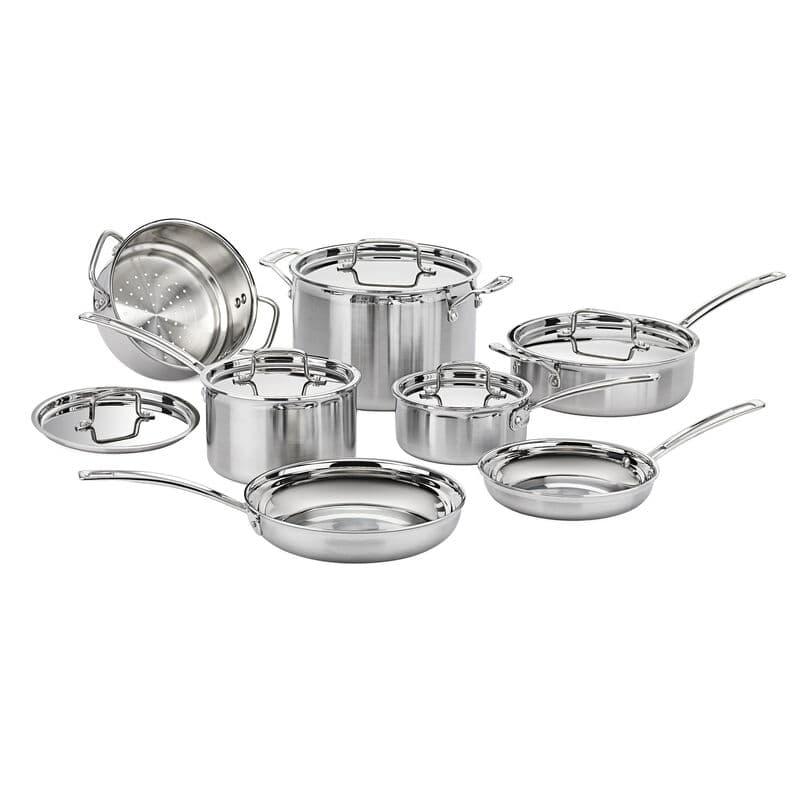
Best overall Cuisinart stainless set
MultiClad Pro
- Model
- MCPS-12N
- Construction
- Triple-ply stainless steel with an aluminum core extending through the base and sidewalls
- Cooktop
- All stovetops, including induction, per the current manufacturer page
MultiClad Pro is the best Cuisinart cookware choice for most serious home cooks because the construction improves the cooking experience, not just the appearance or piece count.
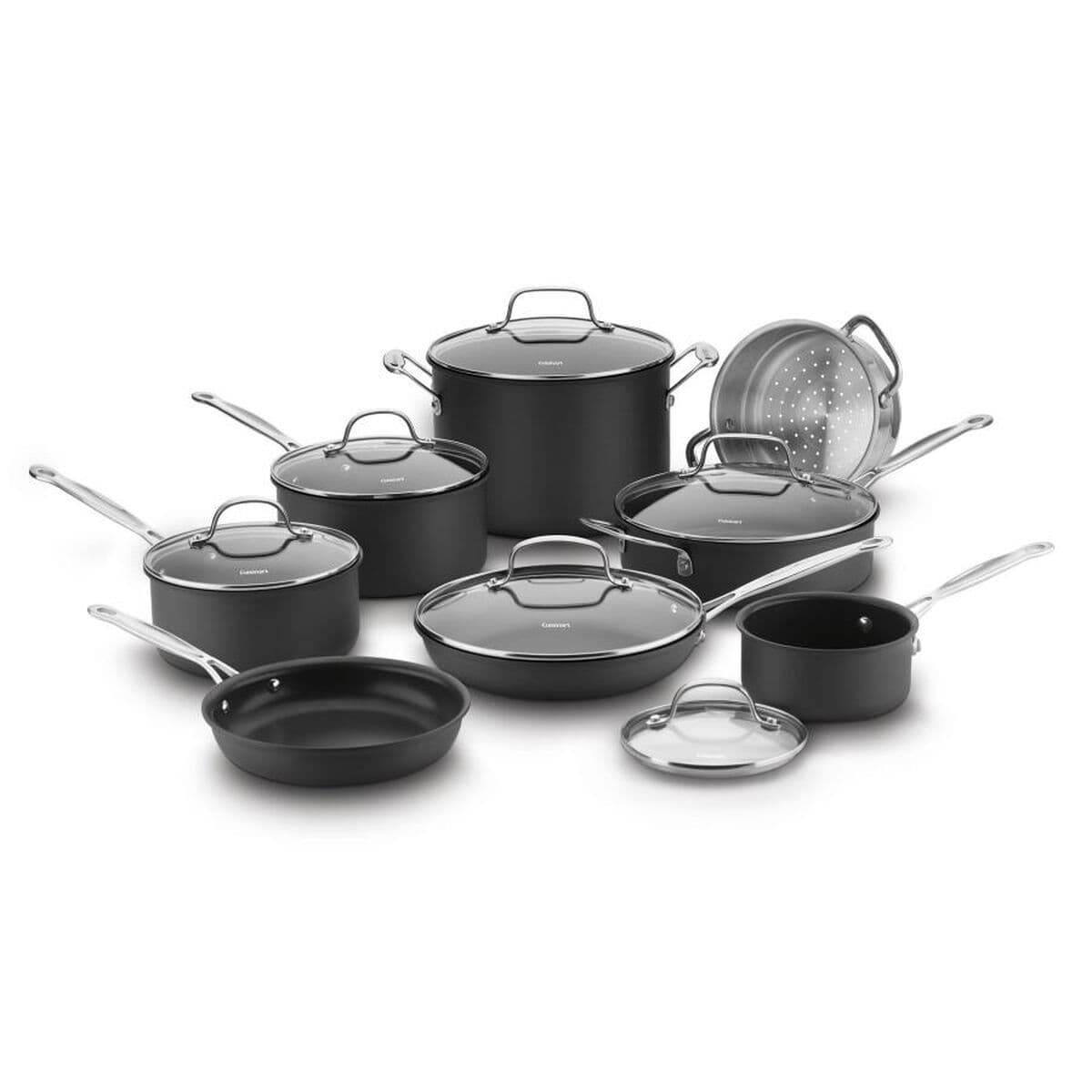
Best Cuisinart nonstick upgrade
Chef's Classic Nonstick
- Model
- 66-14N
- Construction
- Hard-anodized aluminum body with a coated nonstick cooking surface
- Cooktop
- Not positioned as induction-compatible in the current Cuisinart line guide; verify the exact model
Chef's Classic Hard Anodized is the better Cuisinart direction when release and cleanup matter more than stainless longevity or induction compatibility.
Before checkout
Five checks that prevent the wrong buy
Use this list on the exact retailer page. Collection names are not enough when bundles, colors, and legacy models differ.
- 1Identify stainless, coated, glass, and exposed-edge parts
- 2Let the pan cool before washing
- 3Use the least abrasive effective method
- 4Dry rims, rivets, and lid edges
- 5Inspect the surface and handles before storage
How this guide was built
Specs first. Tradeoffs made visible.
We compare exact current reference models using manufacturer-listed construction, included pieces, compatibility, care, and safety details. We then translate those facts into task-level editorial recommendations.
We do not copy Amazon star ratings, publish unstable live prices, or claim hands-on testing we did not perform. A recommendation can change when a model, bundle, or source changes.
Read our editorial policy05
Short answers, exact scope
Frequently asked questions
Can Cuisinart cookware go in the dishwasher?
Some current models, including MCPS-12N, 77-11G, and 55-11BK, are listed as dishwasher safe. Exact guidance varies, and hand washing is often gentler on finishes, coatings, exposed rims, and glass.
How do I remove burned food from Cuisinart stainless?
Deglaze safely while warm, cool, soak with dish soap, and use a non-scratch pad. For persistent polymerized oil, use a stainless-compatible cleaner according to the cookware and cleaner instructions.
Can I use steel wool on Cuisinart cookware?
Avoid it on nonstick and polished finishes. Even on uncoated stainless it can create deep cosmetic scratching, so begin with less abrasive methods and follow the exact manual.
When should I replace a nonstick pan?
Replace it when the cooking surface peels, flakes, exposes the underlying material, develops deep gouges, or no longer releases and cleans normally after gentle care.
Primary sources
Verify the exact model
These manufacturer pages were checked on August 19, 2026. Retailer bundles and legacy versions can differ.