Material decision guide - updated August 19, 2026
Cuisinart Stainless vs Nonstick
A practical Cuisinart stainless vs nonstick guide for searing, eggs, cleanup, care, and long-term value.
As an Amazon Associate I earn from qualifying purchases.
 Independent research guide
Quick answer
Stainless is better for searing, durability, pan sauces, and long-term use. Nonstick is better for eggs, pancakes, delicate foods, and fast cleanup. Many kitchens benefit from both.
01
Read this first
The decision in four lines
01
Stainless rewards heat control and develops fond; nonstick lowers the technique burden for delicate food.
02
A stainless set plus one replaceable nonstick skillet is the most flexible setup for many home cooks.
03
Nonstick coating care matters more than marketing language: use moderate heat, soft tools, and protected storage.
04
Induction and oven compatibility are model-level facts, not assumptions you can make from color or collection name.
02
Task before brand language
Decision table
Steak, chicken, mushroomsStainless
Requires preheating and release timing
Eggs, crepes, delicate fishNonstick
Finite coating life
Pan sauce after searingStainless
More cleanup after hard browning
Fast weekday cleanupNonstick
Avoid very high heat and harsh tools
One material for decadesStainless
Not effortless for every food
03
What changes the answer
Core analysis
Use stainless for heat and fond
Cuisinart stainless sets make more sense when you want browning, deglazing, and cookware that can tolerate metal utensils and more assertive cleaning.
Use nonstick for easy release
Cuisinart nonstick sets are more forgiving for breakfast foods, low-oil cooking, and sticky sauces. Protect the coating with moderate heat, soft utensils, and gentle washing.
The best mixed setup
For many shoppers, the strongest setup is a stainless saute pan or skillet plus one nonstick skillet for eggs. Full nonstick sets are best when convenience beats searing performance.
01
What stainless does that nonstick cannot
Uncoated stainless tolerates the temperatures and surface contact that create deep browning. The browned proteins left behind can be dissolved with stock, wine, or water to form a pan sauce. That controlled sticking is a feature when flavor development is the goal.
- Use medium-to-medium-high heat rather than treating maximum heat as a shortcut.
- Wait for proteins to brown and release before forcing them from the surface.
- Cosmetic scratches do not create the same replacement trigger as a damaged coating.
02
Where nonstick earns its space
Nonstick is not inferior cookware; it is specialized cookware. A reliable coated skillet makes breakfast, reheating, and fragile proteins easier while using less fat. The tradeoff is an ownership routine built around preserving the cooking surface.
- Low-to-medium heat handles most jobs that benefit from nonstick release.
- Wood, silicone, and soft-edge tools reduce avoidable surface wear.
- Replace a pan when the coating peels, flakes, exposes the substrate, or no longer cleans and releases normally.
03
Build a kitchen around tasks, not matching sets
Matching cookware looks orderly, but a task-based kitchen performs better. Start with stainless saucepans, stockpot, and a saute pan for durability. Add a 10-inch nonstick skillet for eggs and a larger skillet only if the household routinely needs it.
- Avoid buying coated stockpots merely to make every piece match.
- Spend more on the pieces that control heat-intensive cooking.
- Treat replaceable nonstick as a supporting tool rather than the entire kitchen foundation.
04
Reference models, not vague collections
Models worth comparing
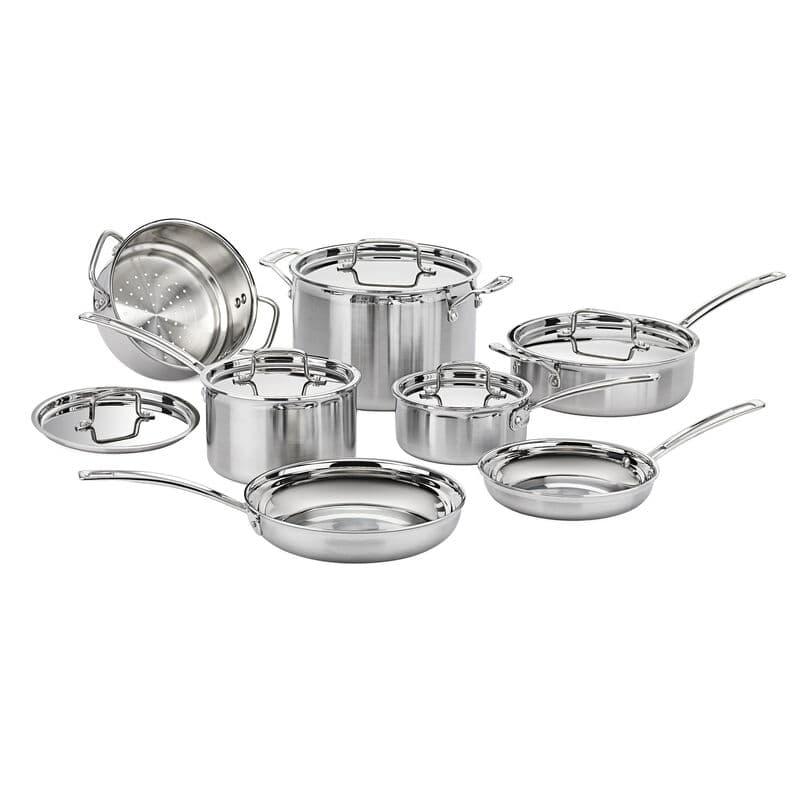
Best overall Cuisinart stainless set
MultiClad Pro
- Model
- MCPS-12N
- Construction
- Triple-ply stainless steel with an aluminum core extending through the base and sidewalls
- Cooktop
- All stovetops, including induction, per the current manufacturer page
MultiClad Pro is the best Cuisinart cookware choice for most serious home cooks because the construction improves the cooking experience, not just the appearance or piece count.
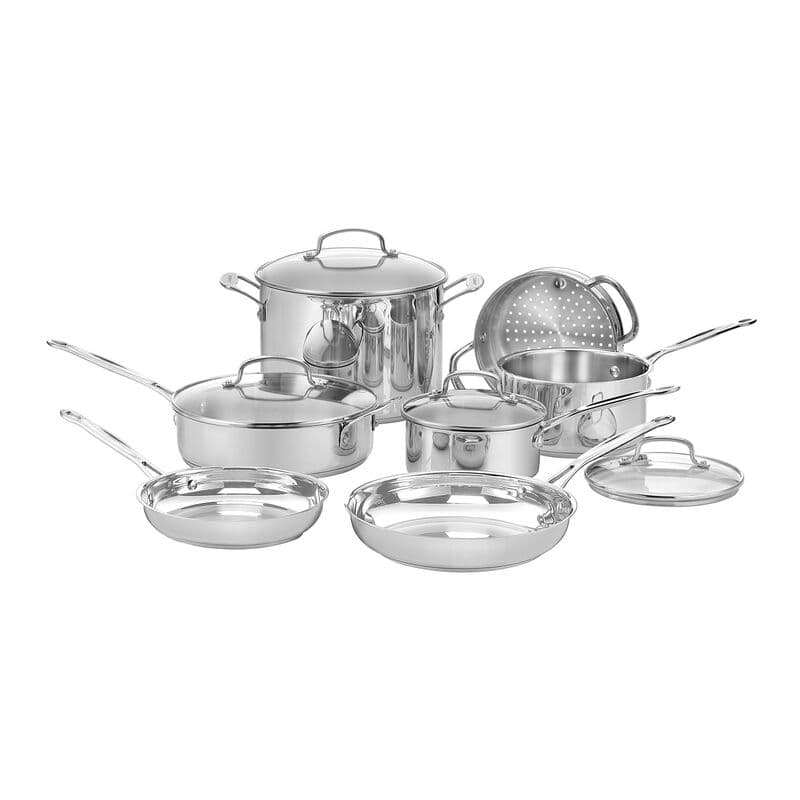
Best budget stainless Cuisinart set
Chef's Classic Stainless
- Model
- 77-11G
- Construction
- Stainless steel vessel with an aluminum-encapsulated base
- Cooktop
- Induction-ready, according to the current 77-11G manufacturer page
Chef's Classic Stainless is the sensible value set: useful pieces, induction compatibility, and stainless durability, with a clear construction tradeoff versus MultiClad Pro.
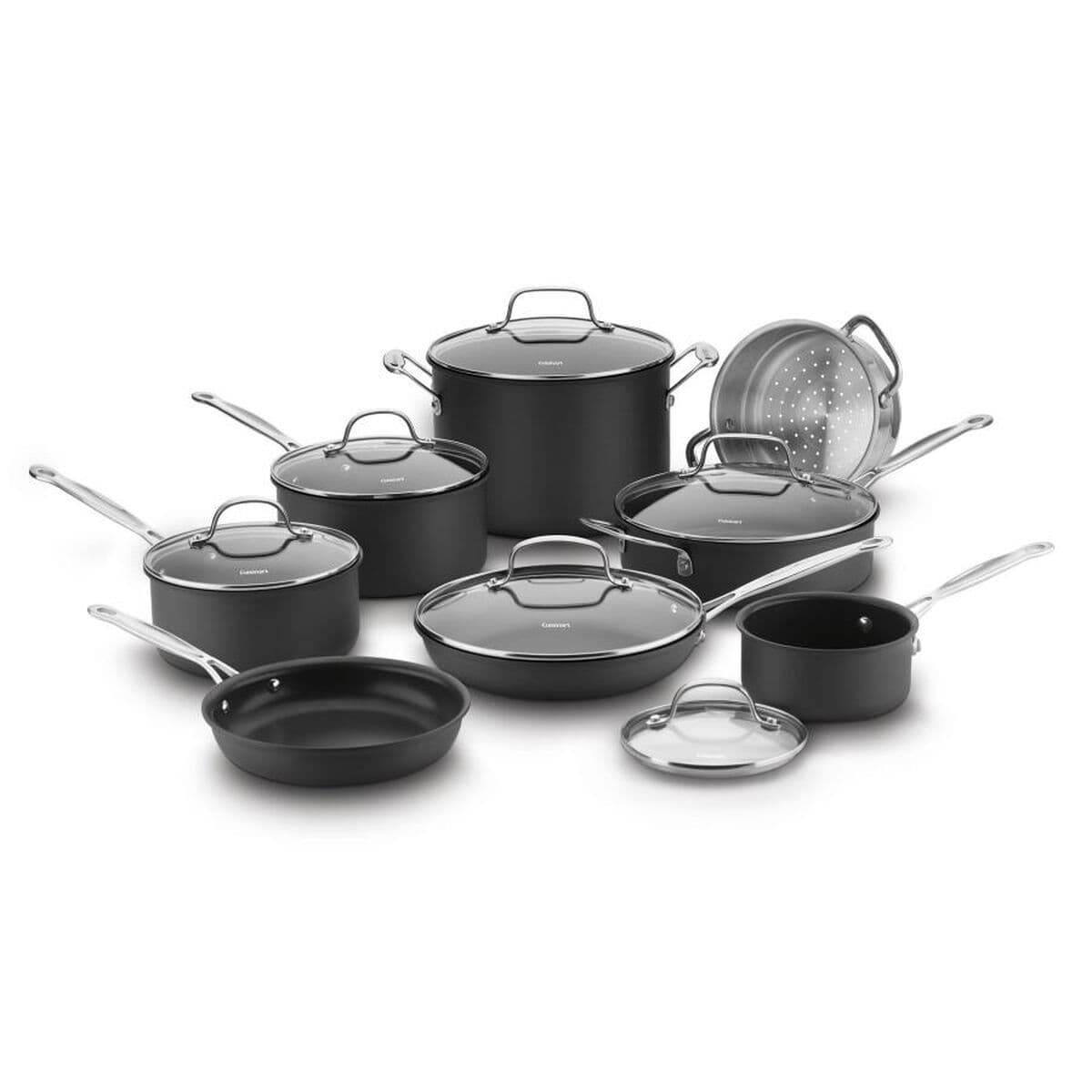
Best Cuisinart nonstick upgrade
Chef's Classic Nonstick
- Model
- 66-14N
- Construction
- Hard-anodized aluminum body with a coated nonstick cooking surface
- Cooktop
- Not positioned as induction-compatible in the current Cuisinart line guide; verify the exact model
Chef's Classic Hard Anodized is the better Cuisinart direction when release and cleanup matter more than stainless longevity or induction compatibility.
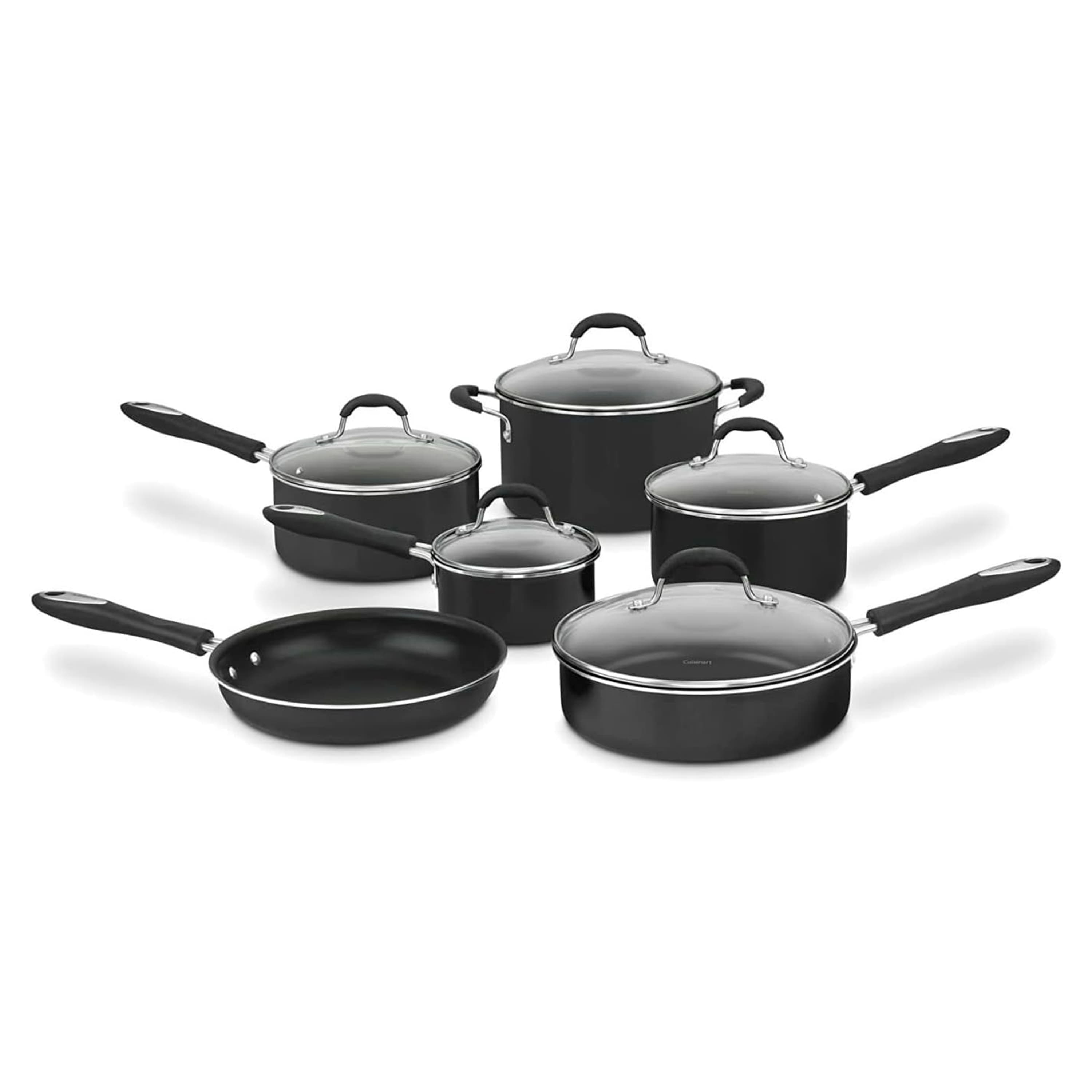
Best budget nonstick Cuisinart set
Advantage Nonstick
- Model
- 55-11BK
- Construction
- Lightweight aluminum body with a nonstick interior and silicone-grip handles
- Cooktop
- Current official page does not state induction compatibility; treat it as non-induction unless the exact listing says otherwise
Advantage Nonstick is the starter-set choice: light, easy, and complete enough for basic meals, but not the Cuisinart line to buy for induction or stainless-style longevity.
Before checkout
Five checks that prevent the wrong buy
Use this list on the exact retailer page. Collection names are not enough when bundles, colors, and legacy models differ.
- 1List the five meals you cook most often
- 2Mark which meals need browning versus easy release
- 3Confirm induction compatibility by exact model
- 4Check the lowest oven limit among pan, handle, and lid
- 5Plan how coated pans will be stored without scratching
How this guide was built
Specs first. Tradeoffs made visible.
We compare exact current reference models using manufacturer-listed construction, included pieces, compatibility, care, and safety details. We then translate those facts into task-level editorial recommendations.
We do not copy Amazon star ratings, publish unstable live prices, or claim hands-on testing we did not perform. A recommendation can change when a model, bundle, or source changes.
Read our editorial policy05
Short answers, exact scope
Frequently asked questions
Is Cuisinart stainless better than Cuisinart nonstick?
It is better for browning, pan sauces, durability, and high-heat flexibility. Nonstick is better for delicate foods and low-friction cleanup, so the right answer depends on the cooking task.
Can stainless cookware become nonstick?
Stainless can release food well with correct preheating, fat, and timing, but it does not become a permanently coated nonstick surface. Eggs remain easier in a dedicated nonstick skillet.
How long should Cuisinart nonstick last?
There is no honest universal lifespan because heat, utensils, cleaning, storage, and frequency change wear. Surface condition is the useful signal: replace damaged, peeling, exposed, or persistently non-releasing cookware.
Should I buy a full nonstick set?
A full set makes sense when easy release and cleanup dominate nearly every meal. Otherwise, a stainless core plus one or two nonstick skillets usually gives more durable coverage.
Primary sources
Verify the exact model
These manufacturer pages were checked on August 19, 2026. Retailer bundles and legacy versions can differ.