Five-step compatibility check - updated August 19, 2026
Cuisinart Induction Compatibility
A practical guide to checking whether Cuisinart cookware works on induction cooktops before buying or using a new set.
As an Amazon Associate I earn from qualifying purchases.
 Independent research guide
Quick answer
Start with Cuisinart stainless lines and confirm the exact product listing says induction compatible. Do not assume every nonstick or aluminum-based set will work on induction.
01
Read this first
The decision in four lines
01
Induction requires a magnetic layer in the cookware base and enough contact area for the cooktop to detect it.
02
Current official pages explicitly position MultiClad Pro MCPS-12N and Chef's Classic 77-11G for induction.
03
Bare aluminum and many aluminum nonstick sets need an added magnetic base to work.
04
Collection names and appearance are weaker evidence than a model-specific compatibility statement.
02
Task before brand language
Decision table
Buying new cookwareRead exact official model page
Retailer copy may be incomplete
Testing cookware you ownMagnet plus cooktop detection
A weak attraction may perform inconsistently
Large skilletMeasure magnetic floor
Rim width does not equal active base
Aluminum nonstickRequire explicit induction base
Aluminum alone is not magnetic
Legacy Cuisinart setLocate model manual
Do not infer from a current namesake
03
What changes the answer
Core analysis
Why the base matters
Induction cooktops need magnetic cookware. A stainless exterior or magnetic base can make a set compatible, but bare aluminum and many nonstick bodies may not work.
Best first Cuisinart line to check
MultiClad Pro is the first line many induction shoppers compare because it is positioned as more serious stainless cookware and is often listed with broad cooktop compatibility.
How to verify
Look for explicit induction language on the current listing, confirm the exact model number, and check user manuals when available before purchase.
01
How induction creates heat
The cooktop energizes a magnetic field that induces electrical currents in compatible cookware. The vessel itself becomes the heat source. That is why a magnetic exterior layer matters even when aluminum inside the pan is responsible for spreading heat evenly.
- The glass cooktop still becomes hot from contact with the heated pan.
- Compatibility does not make handles, lids, or nearby surfaces cool.
- A conductive aluminum core and magnetic stainless exterior can work together effectively.
02
Use the magnet test correctly
Place a strong household magnet against the flat cooking base, not the sidewall or decorative trim. A firm attraction suggests the base is magnetic, but detection thresholds vary by cooktop. The test is useful for existing pieces, while written model compatibility remains preferable before purchase.
- Test several points across a large base if the construction appears layered.
- Measure the actual magnetic floor against the cooktop's minimum pan size.
- Return cookware that is advertised as compatible but is not detected reliably by a functioning zone.
03
Diagnose poor induction behavior
Intermittent detection can come from an undersized base, weak magnetic layer, warped floor, or cookware positioned off-center. Uneven cooking after detection is a separate construction issue. Work through fit and contact before assuming the cooktop or pan is universally defective.
- Try a correctly sized zone and center the vessel.
- Inspect whether the base rocks on a known-flat surface.
- Compare behavior with another verified compatible pan before troubleshooting electronics.
04
Reference models, not vague collections
Models worth comparing
Best overall Cuisinart stainless set
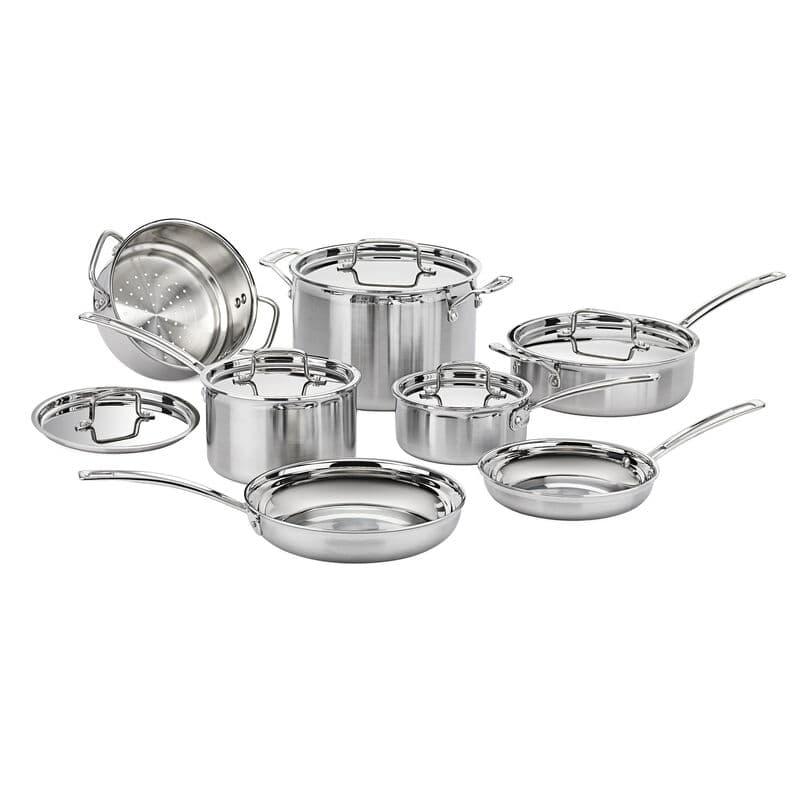
MultiClad Pro
- Model
- MCPS-12N
- Construction
- Triple-ply stainless steel with an aluminum core extending through the base and sidewalls
- Cooktop
- All stovetops, including induction, per the current manufacturer page
MultiClad Pro is the best Cuisinart cookware choice for most serious home cooks because the construction improves the cooking experience, not just the appearance or piece count.
Best budget stainless Cuisinart set
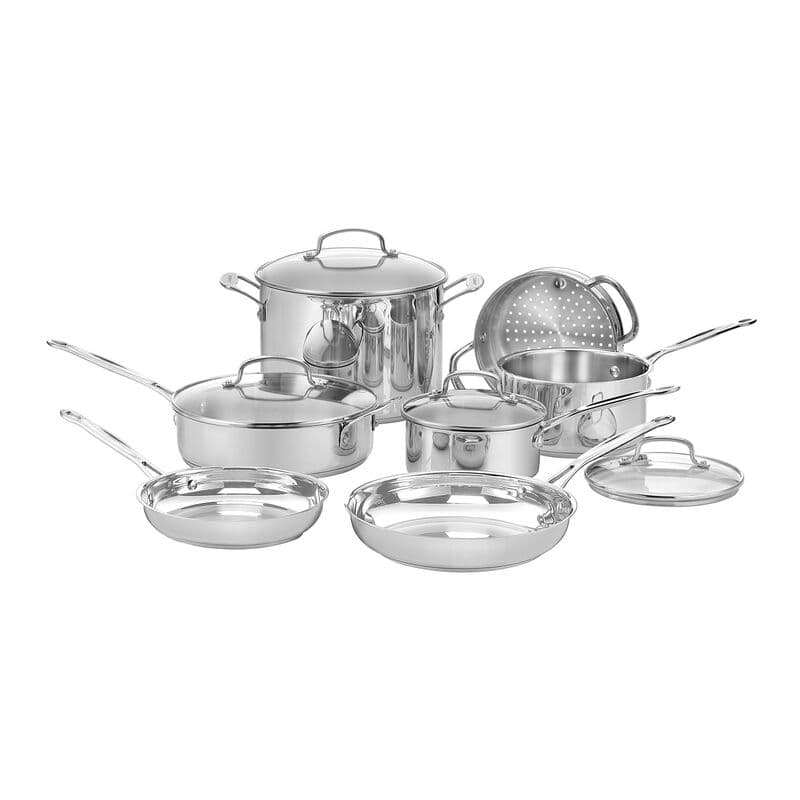
Chef's Classic Stainless
- Model
- 77-11G
- Construction
- Stainless steel vessel with an aluminum-encapsulated base
- Cooktop
- Induction-ready, according to the current 77-11G manufacturer page
Chef's Classic Stainless is the sensible value set: useful pieces, induction compatibility, and stainless durability, with a clear construction tradeoff versus MultiClad Pro.
Before checkout
Five checks that prevent the wrong buy
Use this list on the exact retailer page. Collection names are not enough when bundles, colors, and legacy models differ.
- 1Locate the model number on listing or packaging
- 2Find explicit induction-compatible language
- 3Test existing cookware at the flat base with a magnet
- 4Check minimum and maximum zone diameters
- 5Confirm stable detection before discarding packaging
How this guide was built
Specs first. Tradeoffs made visible.
We compare exact current reference models using manufacturer-listed construction, included pieces, compatibility, care, and safety details. We then translate those facts into task-level editorial recommendations.
We do not copy Amazon star ratings, publish unstable live prices, or claim hands-on testing we did not perform. A recommendation can change when a model, bundle, or source changes.
Read our editorial policy05
Short answers, exact scope
Frequently asked questions
Is Cuisinart cookware induction compatible?
Some Cuisinart cookware is. Current examples include MultiClad Pro MCPS-12N and Chef's Classic Stainless 77-11G. Other lines and legacy bundles need their own verification.
How can I tell if my Cuisinart pan works on induction?
Find the model documentation first. For cookware already owned, test whether a strong magnet firmly attracts to the flat base, then verify stable detection on a correctly sized induction zone.
Why does my induction cooktop not detect a magnetic pan?
The magnetic area may be too small, the attraction may be weak, the base may be warped or off-center, or the selected zone may have a different minimum diameter. Check the cooktop manual and pan fit.
Does hard-anodized Cuisinart work on induction?
Hard-anodized aluminum is not inherently induction compatible. It needs a separate magnetic base, so require explicit compatibility language for the exact model.
Primary sources
Verify the exact model
These manufacturer pages were checked on August 19, 2026. Retailer bundles and legacy versions can differ.